


How to Plan a Tattoo Budget Without Cutting Corners

A tattoo can be a quick walk-in decision or a design you sit with for months. Either way, the best feeling is arriving ready to choose the work you actually want, not asking an artist to make it smaller, simpler, or rushed because the budget ran short. When you plan a tattoo budget, you are making room for good design, skilled application, and a piece you will be proud to wear for years.
A strong tattoo is not the place to hunt for the lowest number. It is worth planning for the artist whose work fits the idea, the time the design needs, and the care that keeps it looking sharp after the appointment.
Start With the Tattoo You Actually Want
Before setting a number, get clear on the tattoo. A vague idea makes for a vague budget. You do not need a finished drawing, but you should know the style, approximate size, placement, color or black-and-gray preference, and whether the design is a simple one-shot piece or a larger custom project.
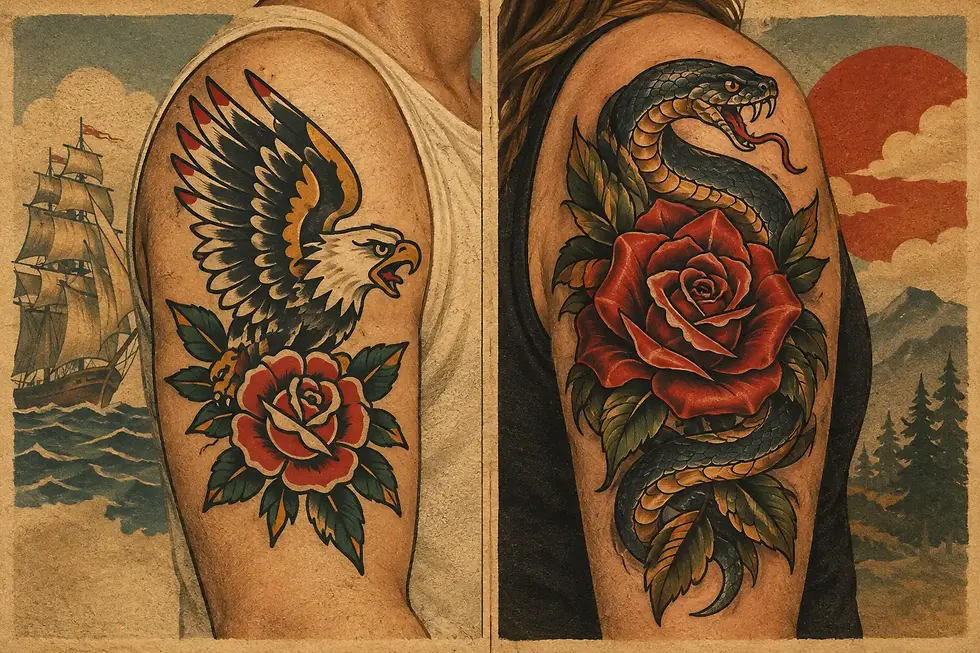
Traditional tattooing is built on clear shapes, deliberate color, and strong contrast. A bold design may read cleanly at a modest size, while a detailed reference image with fine linework may need more space to hold up well. That does not mean every tattoo needs to be big. It means size should serve the design, not just the number you hoped to spend.
Placement matters, too. A palm-sized design on the outer arm is a different appointment from a piece wrapping around the knee, ribs, hand, or elbow. Curves, sensitive areas, older tattoos nearby, and tricky skin all affect the time and concentration required. Bring the real version of your idea to the consultation. A good artist can tell you what will work, what should be simplified, and what deserves another session.
What Goes Into a Tattoo Price
Tattoo pricing is not only about how much ink is used. You are paying for an artist's drawing time, experience, technical control, station setup, sterile single-use supplies, and the focused hours needed to apply a design cleanly. The finished piece is the visible part of a larger process.
For custom work, the artist may need to redraw your concept, adjust it to your body, choose a color approach, and make sure it fits their own visual language. For flash or walk-in tattoos, the drawing may be ready to go, but the appointment still requires setup, placement, preparation, and careful execution.
Size is a useful starting point, but it is not a full pricing tool. Two tattoos that occupy the same amount of skin can take very different amounts of time. Solid color, multiple colors, dense shading, cover-up work, lettering, a difficult placement, and lots of small details can all change the estimate. A larger, straightforward design may even be a better value than a tiny design packed with detail.
The right question is not, “What is the cheapest way to get this?” Ask, “What will this design need to look right?” That shift keeps the conversation focused on the result.
Plan a Tattoo Budget in Four Parts
A realistic tattoo budget has more than one line item. The tattoo itself is the main one, but a little planning around it prevents awkward surprises.
Appointment cost: Reserve the amount discussed with your artist, plus a little breathing room if the estimate is a range or the design may need changes.
Deposit: Many custom appointments require a deposit to hold your time and begin the design process. Ask how it applies to the final cost, as well as the rescheduling and cancellation policy.
Tip: If you plan to tip, set that money aside before the appointment instead of trying to calculate it at the counter. The amount is personal, but preparation is good manners.
Aftercare and day-of costs: Include recommended aftercare, transit or parking, meals, and any time you may need away from physical work, swimming, or a packed social schedule.
If you are traveling to Oakland for an appointment, add transportation and lodging before you commit. A tattoo should not leave you choosing between proper aftercare and getting home.
This four-part approach also helps first-time clients understand why the final total may be different from a quick guess based on a photo online. Photos do not show the size, placement, skin, or planning behind the work.
Build in a buffer, not a compromise
Give yourself a buffer of 10 to 20 percent when you can. It is not there to encourage spending for the sake of it. It is there because good decisions sometimes cost a little more than your first estimate. Maybe the design needs to be larger to stay readable. Maybe a particular placement takes longer. Maybe you decide the artist's original color suggestion is the stronger choice.
A buffer lets you say yes to sound advice instead of forcing a weaker version of the tattoo. If you do not use it, great. It becomes the beginning of your next tattoo fund.
Match the Scope to Your Savings
There is nothing wrong with having a fixed budget. Just be direct about it early. An artist can often suggest a version of your idea that makes sense within that range, whether that means simplifying the concept, choosing a more efficient placement, selecting flash, or saving for a larger appointment later.
The important distinction is between editing a tattoo thoughtfully and cutting corners blindly. A simpler tattoo can be powerful. In fact, some of the best tattoos are simple because every line and shape has a job. But shrinking complex imagery until it loses clarity is not the same as intentional simplicity.
For a larger project, consider saving by session rather than trying to pay for the whole thing immediately. Ask how the work is likely to be divided and how much time should be between sessions. Healing, scheduling, and your own cash flow all matter. A sleeve, back piece, or multi-part project is a commitment, so make sure the pace feels sustainable.
If the tattoo is a gift, a gift card can be a clean way to contribute without deciding the recipient's design, artist, or placement for them. Those choices should stay personal.
Choose the Artist Before You Choose the Price
Portfolio fit is one of the smartest places to spend time. Look for healed-looking, confident work in the style you want. Pay attention to clean lines, solid color, readable composition, and designs that sit naturally on the body. If you want bright, bold, timeless tattooing, choose an artist who regularly makes that kind of work.
It can be tempting to use price as the first filter. But tattoos are permanent, and the cheapest option can become expensive if you later need to live with a design you never liked. Your budget should help you get to the right artist, not steer you away from them.
At Good Tattoo, the point is simple: good tattoos are the norm, not the exception. That standard starts with choosing work that fits the artist and giving the appointment enough time to be done well.
Ask Clear Questions Before Booking
You do not need to know tattoo terminology to have a useful consultation. Clear, practical questions are enough. Ask whether your idea works at the size you have in mind, whether the estimate is based on a minimum, an hourly rate, or a session rate, and whether the work is likely to need more than one appointment.
Also ask what the deposit covers, what happens if you need to reschedule, and what aftercare the artist recommends. If you have a firm ceiling, say so without apology. Honest information gives the artist something real to work with.
For walk-ins, have a range in mind rather than one exact number. The available artist, selected design, placement, and amount of time left in the day can all shape what is possible. Flexibility is part of the fun, but it still helps to know what you are comfortable spending.
Make Saving Feel Simple
A tattoo fund does not need to be dramatic. Pick a target based on your consultation or a realistic range, then divide it by the number of paychecks or weeks before you want the appointment. Keeping that money in a separate savings account or labeled envelope makes it less likely to disappear into everyday spending.
If the number feels too far away, do not rush into a lesser version just to get tattooed sooner. Revisit the design. A smaller, bolder concept might be exactly right. Or the better move may be to wait, keep saving, and book the piece you wanted in the first place.
The best tattoo budget is not the smallest one. It is the one that gives your idea enough room to become a tattoo worth keeping.


Comments