


Can Tattoos Be Personalized? Make It Last

A tattoo can carry a private meaning without looking like a secret code only you can read. That is the sweet spot. So, can tattoos be personalized? Absolutely. The best personalized tattoos take something specific to you and turn it into a design with enough clarity, contrast, and confidence to hold up on skin for years.
Personal does not have to mean literal. It does not have to mean a full portrait, a date, or every symbol connected to a memory squeezed into one drawing. Sometimes it is a rose built around a particular color palette. Sometimes it is a familiar animal with a distinct expression. Sometimes it is a bold design placed where only you see it most of the time. The goal is not to explain your life story at a glance. The goal is to wear a good tattoo that feels like yours.
Can Tattoos Be Personalized Without Being Overdesigned?
Yes, and restraint is usually what makes it work. Skin is not a sketchbook page. Fine details can soften, tiny gaps can close, and too many competing ideas can make a tattoo hard to read from a few feet away. A strong custom tattoo starts by deciding what deserves the spotlight.
Bring the core idea first. Maybe it is your grandmother's favorite flower, a line from a letter, a place you return to, or a subject you have collected for years. Then consider which part matters most: the shape, the mood, the color, the symbolism, or the story behind it. Your artist can use that answer to build a tattoo instead of simply copying a reference image.
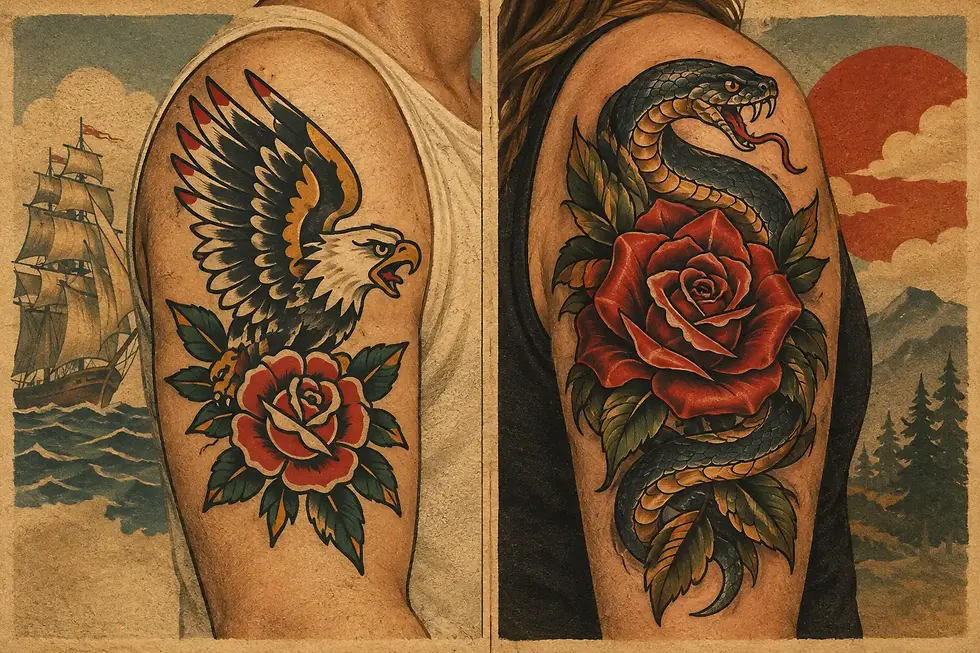
Traditional tattooing offers a useful lesson here. Bold lines, clear shapes, and solid color are not limitations. They are tools for making a design visible, readable, and durable. A personalized tattoo can still be bright and bold. In fact, a familiar traditional format often gives a personal idea the structure it needs to last.
A swallow can reference a family member. A dagger can mark a difficult season you made it through. A panther can be chosen because it looks powerful, not because it needs a paragraph of explanation. Meaning and strong design should work together. If one overwhelms the other, the tattoo may lose its punch.
Start With the Story, Not the Screenshot
Reference photos are useful, but they are a starting point, not a final order. Showing an artist ten images with unrelated styles can make it harder to identify what you actually want. Instead, describe what you respond to in each image. Is it the color? The heavy outline? The movement? The way the tattoo fits the body?
Give context in plain language. Say you want a memorial tattoo that feels warm rather than somber. Say you want a snake, but not a realistic one. Say you want something tough, playful, clean, or dramatic. Those details help an artist make choices that fit both your idea and their tattooing style.
It also helps to separate must-haves from nice-to-haves. A must-have might be a specific flower, a name, or a meaningful number. A nice-to-have could be a certain background element or color. This gives the design room to breathe when the composition calls for a change.
For a planned custom appointment, share your concept early and choose an artist whose portfolio shows the kind of work you want. If you are coming in for a walk-in, arrive with a clear main idea and stay open to a version that fits the available time, placement, and artist. Both paths can lead to a personal tattoo. They simply call for different levels of preparation.
Personalization Lives in the Details
Not every personal choice needs to be obvious. Some of the strongest custom touches are design decisions that make a tattoo feel specific without making it crowded.
Color is one option. You might use a color that reminds you of a favorite jacket, a sports field at night, a childhood home, or another tattoo in your collection. But color needs contrast. A shade that looks great on paper may not read well against your skin tone or next to existing work. An experienced artist can guide you toward colors that keep their energy over time.
Placement changes the feeling of a tattoo, too. The same design can look loud on the hand, private on the thigh, classic on the upper arm, or sharp across the calf. Think about how the body moves and how much room the image needs. A long design may want a long area. A round design often needs a more open field. Trying to force a design into a space it does not suit is one of the quickest ways to weaken it.
Lettering deserves the same care. A phrase can be meaningful, but size and spacing matter. Tiny script may look elegant on day one and become difficult to read later. If the words are essential, give them enough room. If the feeling behind the words is more important than the exact sentence, consider whether an image can carry it more strongly.
You can also personalize a tattoo through composition. An artist might frame a subject with leaves from a meaningful plant, use a particular object as a background, or create a companion piece that speaks to tattoos you already have. These choices make the work feel connected to your life and your collection without turning the design into a collage.
Let the Artist Improve the Idea
Custom work is collaboration, not a test of whether an artist can reproduce a phone image exactly. You are bringing the reason for the tattoo. The artist is bringing the drawing skill, technical judgment, and experience needed to make that reason work on skin.
That may mean hearing a useful no. A good artist may suggest making an element larger, simplifying a face, moving the placement, or dropping a detail that will not age well. That is not a failure to personalize the tattoo. It is part of protecting the tattoo's future.
Be direct about what you do not want, too. If a symbol has a meaning you want to avoid, say so. If you want the piece to feel more classic than delicate, or more colorful than dark, make that clear. Honest direction is more helpful than trying to speak in tattoo jargon.
At Good Tattoo, the standard is simple: make the tattoo look good first, then make sure it feels like it belongs to you. The two should not be in conflict. A skilled artist can find the version of your idea that has strong lines, a solid shape, and a personal point of view.
Think About the Tattoo Five Years From Now
Personalized tattoos are often tied to a moment, and that is fine. You do not need to wait until every part of life feels settled before getting tattooed. But it is worth asking whether the design will still feel right when the immediate excitement has passed.
Choose an image you want to live with, not just an idea you want to document. There is a difference. A small object from a trip may become a better tattoo than a map with every stop labeled. A flower connected to someone you love may age more gracefully than a complicated quote about loss. The memory stays personal even when the design remains simple.
This is especially true for trend-driven imagery. A trend can be fun, but it should not be the only reason a tattoo exists. If you love it, wear it. If you mostly like seeing it online, give yourself time. Timeless does not mean boring or old-fashioned. It means the tattoo has enough visual strength to outlast a passing mood.
Questions Worth Asking Before You Book
Before committing, ask yourself whether the tattoo reads clearly from a normal distance, whether the placement gives it enough room, and whether you trust the artist's approach to the subject. Those questions matter more than finding the perfect reference photo.
Ask your artist what will need to change for the design to work best. Ask how large it should be, what colors will read well, and whether the placement affects the drawing. If you already have tattoos nearby, ask how the new piece can sit alongside them instead of fighting for attention.
For first-time clients, personal does not have to mean huge or complicated. A well-drawn smaller tattoo can be a smart first step. For experienced collectors, personalization may be about building a sleeve, leg, or body of work with a consistent rhythm. Either way, good decisions come from giving the tattoo the space and design attention it deserves.
Bring the story. Bring a few useful references. Then leave room for the drawing to become better than the picture in your head. The most personal tattoo is often the one that says exactly what it needs to say, with nothing extra in the way.


Comments