


A Traditional Tattoo Symbolism Guide for Bold Ink

A panther, a rose, a ship, a heart with a name inside - traditional tattoos look simple because the best ones are. But the imagery carries history, personality, and a visual language built to stay strong for life. This traditional tattoo symbolism guide focuses on the classic American tradition: bold outlines, solid color, clear shapes, and designs that say something without needing a paragraph to explain them.
The first rule is worth stating plainly: symbolism is a starting point, not a contract. A swallow may have a history tied to sailors, but it can also mean home, freedom, travel, or simply that you love the design. The strongest tattoo is one you want to wear, not one chosen because a chart told you what it is supposed to mean.
Traditional Tattoo Symbolism Guide: Start With the Image
American traditional tattooing grew through ports, military culture, road culture, and working-class self-expression. Its imagery was made for skin, not a museum label. A design had to read quickly, hold up under pressure, and remain recognizable from across a room.
That is why the symbols are direct. A rose looks like a rose. A dagger looks sharp. A panther is built for movement and force. Traditional flash is not trying to hide its message. It uses a limited visual vocabulary with enough flexibility for every client to make it personal.
When choosing a design, think about three things together: what the image has historically represented, what it means to you, and whether you genuinely want to look at it for decades. If those answers line up, you are in good shape. If the history does not fit but the art does, a good artist can help steer the idea toward something that does.
Classic Motifs and What They Can Mean
Swallows, Sparrows, and Other Birds
Swallows are among the best-known sailor tattoos. They were traditionally associated with long journeys and the hope of returning home. A bird flying toward the chest can suggest a return, while one flying away can suggest departure, though personal meaning always wins.
Sparrows are often read as symbols of loyalty, resilience, and freedom. Both birds work beautifully as a pair, with one on each side of the chest or as matching smaller tattoos. Their compact shape and open wings give them natural motion, which is part of why they remain a classic.
Roses and Other Flowers
The rose is traditional tattooing's great all-purpose symbol. It can mean love, beauty, devotion, grief, celebration, or a person worth remembering. Red roses lean toward passion and romance, while black roses are often chosen for loss, strength, or a darker visual mood. A yellow rose can feel bright and friendly. Color shifts the feeling, but it does not have to dictate the meaning.
Flowers also do useful design work. They can frame a name, soften a dagger, fill space around an existing tattoo, or give a tough image some contrast. Traditional designs often hit harder when they pair sweetness with danger.
Hearts, Sacred Hearts, and Daggers
A heart is one of the clearest symbols in tattoo history. It can carry love, family, friendship, memory, or commitment. Add a banner and it becomes a direct dedication. Add flames and it gets louder. Put a dagger through it and the message turns toward heartbreak, survival, betrayal, or the fact that love can hurt.
The sacred heart has religious roots and is often tied to devotion, sacrifice, and faith. It deserves more thought than a generic symbol. If its spiritual history is part of what draws you in, say so during your consultation. If you are after the visual structure of flames, rays, and a heart, an artist can help find a related design that is honest to your intent.
Snakes and Panthers
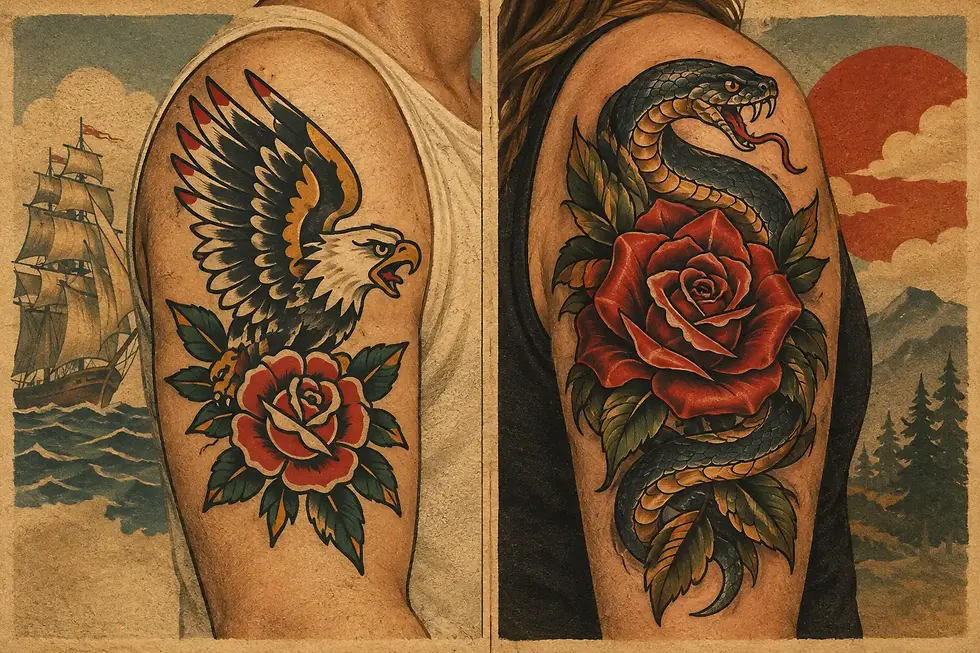
A snake can mean wisdom, temptation, transformation, protection, or danger. In traditional tattooing, it is also just a great piece of design: curved body, scales, fangs, and a shape that can wrap an arm or fit a tough narrow gap. A snake with a dagger brings conflict into the picture. A snake shedding its skin naturally suits a fresh-start story.
Panthers are pure power. The crawling panther is one of the most recognizable traditional designs because it flows with the body and looks alive from every angle. It can stand for courage, ferocity, protection, or refusing to be pushed around. Sometimes it means you wanted a black panther because nothing else would look better there. That is a valid reason.
Eagles, Hawks, and Predatory Animals
The eagle is commonly associated with independence, courage, and clear-eyed focus. In American traditional work, it is often shown with spread wings, a banner, or a snake in its talons. The image is bold by nature, so it earns space well on the chest, upper arm, thigh, or back.
Predatory animals bring their own energy. A wolf can suggest loyalty or survival. A tiger is often chosen for confidence and force. The difference is less about a fixed dictionary definition and more about posture, expression, color, and placement. A snarling head and a calm full-body animal tell very different stories.
Ships, Anchors, and Nautical Stars
Nautical imagery sits close to the roots of American traditional tattooing. A ship can represent adventure, work, travel, or making it through rough water. Full-rigged ships are detailed enough to feel grand but still hold their shape when designed with proper spacing.
Anchors traditionally suggest stability and a safe return. They are a natural fit for someone who values being grounded, family, or a place that keeps them steady. Nautical stars have long been connected to direction and finding your way. Their clean geometry makes them especially useful in smaller tattoos, but crisp lines matter. Tiny stars with crowded points do not age as well as a design given enough room to breathe.
Skulls, Dice, and Lucky Symbols
A skull does not have to be grim. It can be a reminder that life is short, a marker of survival, a love of old-school imagery, or a straight-up celebration of the macabre. Pair it with a rose for beauty and mortality. Add a snake for danger. Give it a grin if you want the piece to feel more rowdy than mournful.
Dice, horseshoes, playing cards, and eight balls speak to chance, risk, luck, and a willingness to take the long odds. They are popular because they are graphic, compact, and easy to personalize. A number, card hand, or banner can make the idea more specific without turning it into a cluttered puzzle.
Meaning Should Not Override Good Design
A tattoo can have deep personal meaning and still need a design edit. This is where trade-offs matter. A phrase that requires tiny lettering may not read well in ten years. A favorite image may need to be simplified to sit properly on a wrist. A large story may work better as several connected tattoos than one crowded composition.
Traditional tattooing has answers for those problems because it is built on clarity. Strong line weight, open skin, saturated color, and a readable silhouette are not limitations. They are what make an image last. A solid tattoo should still make sense after sun, time, and the normal changes that come with living in your body.
Placement changes the symbolism, too. A heart over the chest can feel intimate. A bold eagle across the chest feels declarative. A small rose on the hand is impossible to ignore, while the same rose on the thigh can stay more private. Think about visibility before you commit, especially if this is your first tattoo or your workplace has limits.
Make a Classic Symbol Your Own
You do not need to invent a new symbol to get a personal tattoo. The personal part may be the color palette, the facial expression, a banner with a name, or the way two classic motifs are combined. A rose and a horseshoe can honor someone you love. A ship under storm clouds can mark a hard season you made it through. A swallow carrying a small flower can say more than a long quote ever could.
Bring a clear idea, not a rigid blueprint. Reference images are helpful for showing mood, scale, and subject matter, but the finished tattoo should be drawn for your body and your artist's hand. If you are choosing from flash, ask what can be adjusted and what should stay intact for the design to work. Some changes add meaning. Others weaken the image.
For Bay Area clients, a conversation in the shop is often the fastest way to turn a symbol into a tattoo that fits. Whether you walk in with one strong idea or a folder full of references, start with the image you keep coming back to. The right traditional tattoo does not need to explain itself to everyone else. It just needs to look right on you.


Comments