

Why American Traditional Tattoo Style Lasts

A panther should still look like a panther from across the room. A rose should not turn into a red blur after a few summers. That practical, hard-earned standard is at the heart of american traditional tattoo style. It was built for skin, not for a tiny image on a phone screen.
This is tattooing with clear priorities: strong outlines, solid color, recognizable images, and enough open skin to let the design breathe. The results can be loud, funny, sentimental, tough, or all four at once. More than anything, they are made to last.
What Defines American Traditional Tattoo Style
American traditional tattoo style is often recognized before someone can name it. Black outlines are confident and consistent. Color is packed in cleanly, usually with a focused palette of red, yellow, green, blue, and black. Shading is simple and purposeful rather than soft and photographic.
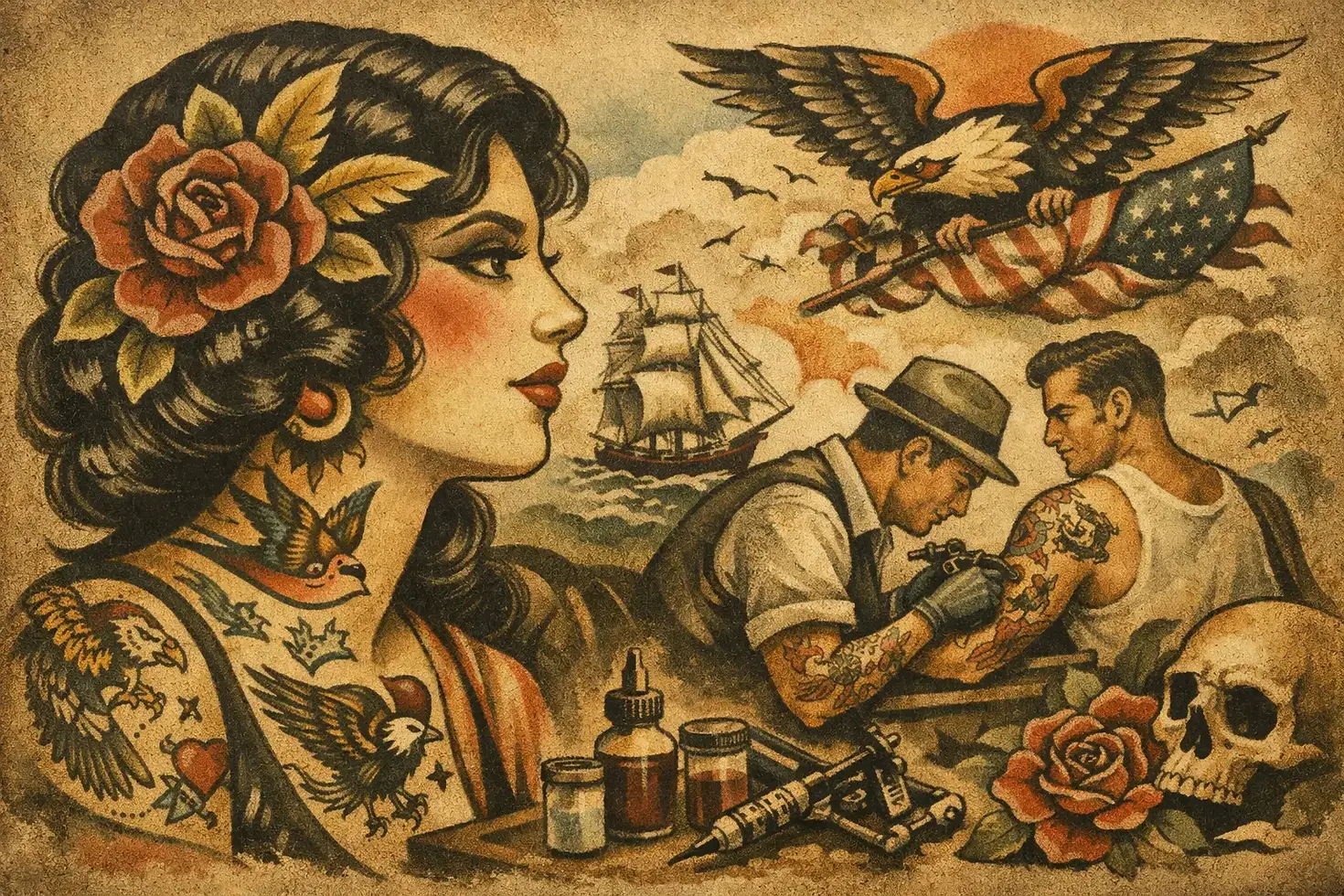
The imagery is equally direct. Eagles, swallows, daggers, hearts, snakes, ships, panthers, skulls, roses, dice, lucky horseshoes, and pinups have stayed in the vocabulary because they read quickly and carry weight. A tattoo does not need a paragraph of explanation when the picture already says something.
That does not mean every traditional tattoo has to copy an old piece exactly. The style has room for personal stories, strange ideas, favorite animals, inside jokes, and custom symbols. The point is to translate the idea into a design with a strong silhouette and a clear visual hierarchy. If the main image cannot be recognized at a glance, it may need a different approach.
Bold lines are doing real work
A tattoo is not a flat print. Skin moves, stretches, sees sunlight, and changes over time. Linework naturally softens as it settles and ages. Traditional tattooing accounts for that from the start with outlines that have enough weight to hold the design together.
Fine lines can be beautiful when they suit the subject and placement. But a tiny, highly detailed image asks a lot from a small area of skin. Bold outlines give traditional work more margin for the future. They keep forms separated, make color feel contained, and help the tattoo read from a normal viewing distance.
Simple is not the same as easy
A traditional design may look simple because it is edited well. That is different from being basic. Fitting a face, animal, flower, or object into a few clean shapes takes drawing skill and restraint. Every line has a job.
The best designs avoid detail that only works under a magnifying glass. They use contrast, spacing, and composition to create impact. A good rose needs petals that feel alive. A good snake needs movement. A good dagger needs a shape that looks sharp without relying on a hundred tiny marks.
Why This Style Ages So Well
The lasting appeal of traditional tattoos is not just nostalgia. It is a design advantage. High contrast, clear negative space, and simplified forms give the tattoo room to remain legible as skin and pigment change together.
Black outlines create a frame. Saturated color creates impact. Open areas prevent neighboring details from crowding each other. Those choices may feel less delicate than a hyper-detailed illustration on day one, but they often look more intentional years later.
Placement matters, too. A design needs to fit the part of the body it lives on. The outer forearm, upper arm, thigh, calf, and chest can give a traditional piece room to make its statement. Hands, fingers, feet, and areas that rub against clothing can be great placements, but they come with different healing and wear considerations. A good artist will be honest about what the design can do in each spot.
Color choice also depends on the person wearing it. Warm skin tones, cool skin tones, existing tattoos, and the amount of contrast in the design all affect the final look. Traditional color is bold, but black-and-gray traditional work can be just as strong when the composition is built around it.
The Symbols Have History, but They Are Still Yours
Traditional tattoo imagery came from sailors, service members, workers, travelers, and tattooers who built a visual language through repetition. A swallow could speak to a journey. A ship could mean home, distance, or survival. A heart could hold a name, a promise, or a loss. The images were direct because they had to carry meaning without much explanation.
Those associations are worth knowing, especially if you are drawn to the history of tattooing. But you do not need to inherit someone else’s story to earn a design. A panther can simply be the best possible panther. A rose can mark a person or moment without turning into a memorial plaque. A custom tattoo can be deeply personal while still looking clean and classic.
This is where collaboration matters. Bring the idea, reference material, and any non-negotiables. Then leave room for the artist to make tattoo decisions. A reference image can communicate mood or subject matter, but copying every tiny feature is not always the best path to a lasting tattoo. The strongest version may be simpler, larger, or composed differently for your chosen placement.
Choosing the Right Size and Placement
The most common mistake with a traditional tattoo is trying to make it too small. A tiny design can be charming, but it has limits. A full eagle with feathers, banners, talons, and lettering needs enough room for each element to stay separate. Reducing it too far can turn strong design into visual traffic.
Think about what you want the tattoo to do. Do you want it to be a quick, punchy image that works as a walk-in? A palm-sized heart, dagger, skull, or flower can hit hard. Do you want a larger custom piece that works with your existing collection? That may call for a consultation, a more deliberate placement, and more time for the drawing to develop.
Your body is not a sheet of paper. The curve of a shoulder, the width of a thigh, and the movement of an elbow all change how a tattoo reads. A good design follows that shape instead of fighting it. Sometimes moving an image two inches makes the entire composition better.
A few questions worth asking before your appointment
Before settling on a design, ask yourself whether you want color or black-and-gray, how visible you want the tattoo to be day to day, and whether you are starting a larger collection. It also helps to consider whether the image needs to mean something specific or simply needs to look great.
For a first tattoo, direct is usually better. Pick an image you genuinely want to wear, give it enough space, and choose an artist whose portfolio shows the kind of linework, color, and drawing you are after. You do not need to arrive knowing every technical term. You do need to be open about your budget, desired placement, and any concerns.
American Traditional Tattoo Style Is Built for Collecting
Traditional work has a natural rhythm on the body. Individual tattoos can stand on their own, then gradually build into a larger collection. A small rose on one arm and a larger animal on the other do not need to match perfectly to belong together. The shared language of line weight, color, and composition does the work.
That flexibility is part of the fun. You can plan a sleeve from the beginning, or let the collection develop one good tattoo at a time. Both approaches work. The trade-off is that planned projects can create more control over flow and spacing, while a patchwork collection leaves more room for spontaneous choices and future surprises.
Walk-in flash is a great fit when you see a design that already feels like yours. Custom work is better when the concept needs personal details, a specific placement solution, or a larger-scale composition. Neither route is more legitimate. The right one is the one that gives the tattoo enough thought and enough room to be good.
Keep the Standard High
A traditional tattoo should feel easy to read, not easy to forget. Look for clean linework, solid color, balanced shapes, and designs that still have energy without a pile of extra detail. Good work holds up because the artist made smart choices before the needle touched skin.
At Good Tattoo, that means treating a quick walk-in design and a carefully planned custom appointment with the same respect for drawing, placement, and craftsmanship. Bring a clear idea or come in ready to find one. The goal is not to chase a passing look. It is to leave with a tattoo that will still feel right when the years catch up to it.


Comments